The SEO landscape has been one wild ride over this last year, with the public release of ChatGPT, Google’s massive changes to its guidelines, and new, previously undisclosed information about how they track and use data.
If you want to stay relevant, it’s essential to move beyond traditional methods.
The Rise of AI in SEO Content Creation
AI-generated content has been a hot topic in SEO circles for a while now. Many SEO and content professionals have been testing out AI-based tactics and debating the best processes to use.
As noted by Danny Sullivan, “key to being successful with our helpful content system…and if it’s not helpful content, the system catches that.” This means that Google has updated its algorithm to catch content that fails this test.

E.E.A.T.: The New Standard
Google’s expansion of its E-A-T (Expertise, Authoritativeness, Trustworthiness) guidelines to include “Experience” reflects the increasing value placed on first-hand knowledge. While AI can imitate content patterns on other websites, it can’t experience your products or services in real life.
Content creators who show that they are using a product, visiting a place, or providing unique insights are more likely to succeed in SEO today. Demonstrating real-life expertise can set your content apart and boost your search rankings.

The Major Update You Need to Know About
The March 2024 Google Helpful Content Core Update was a significant shift in Google’s search algorithm. This update aimed to reduce low-quality and unoriginal content by 40%.
One of the largest updates since Panda and Penguin, the 2024 update introduced manual penalties for sites that fail to meet quality standards. It emphasized that both Google and its users want to see high-quality, human-focused content.

Google’s Ranking Signals: Insights From a Leak and the DOJ Antitrust Testimony
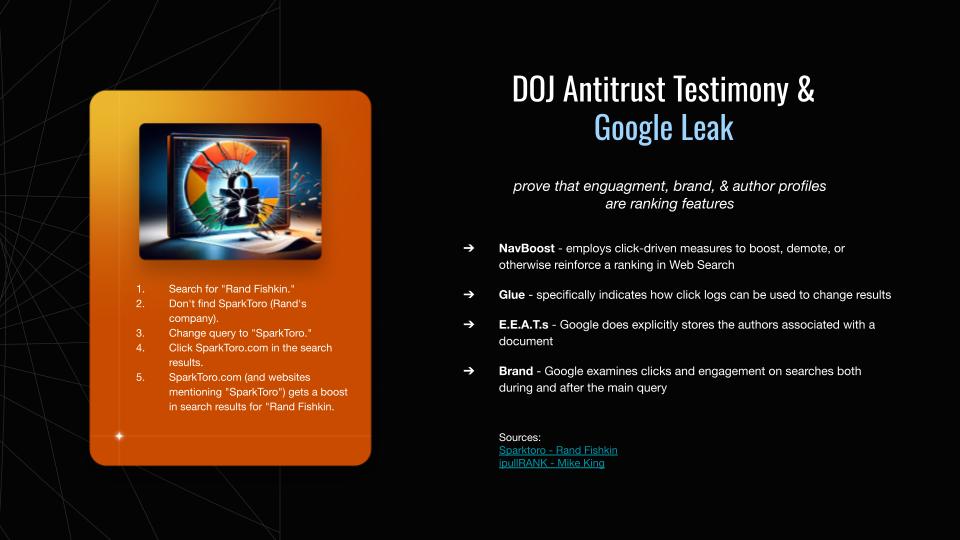
In May 2024, an anonymous source leaked thousands of Google search API documents. A few months later, Judge Amit Mehta announced a ruling that Google had illegally monopolized several digital advertising technologies, which closed out a months-long antitrust lawsuit from the U.S. Department of Justice. The leak and the testimony from the lawsuit gave SEO professionals a lot of insights into Google’s ranking signals.
- Google’s NavBoost and Glue algorithms collect information on user engagement and are used to demote or reinforce rankings
- Google stores author information
- And clicks on searches during and after a main quirt are linked
This information proves that genuine engagement is critical. If your website isn’t helpful to users, Google can tell — and that will have a huge effect on your search rankings.
What Needs to Change in Your SEO Content Strategy
To adapt to these changes, SEO strategies must shift from traditional approaches to more dynamic and user-centered tactics. To summarize:
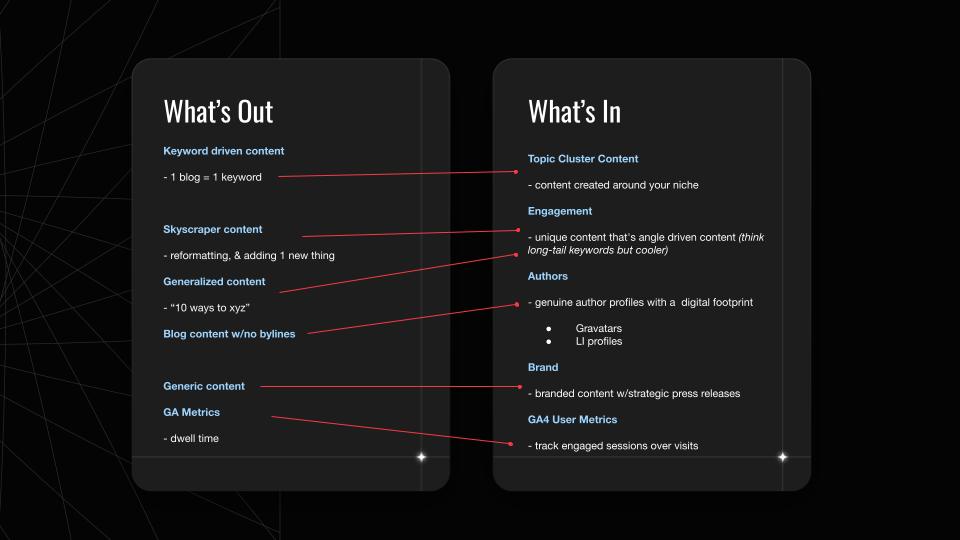
- Out with Keyword-Only Tactics. It’s time to move beyond single-keyword content strategies. Instead, create comprehensive, topic-clustered content that addresses a broad spectrum of related queries.
- In with Topic Cluster Content. Create content around your niche that addresses your audience’s needs.
- Out with Generic Content and Skyscraper Tactics. Simply reformatting existing content or compiling lists like “10 ways to XYZ” is no longer enough. Instead, provide in-depth, experience-backed content that genuinely adds value.
- In with Engaging, Unique Content: Prioritize content that has a unique angle and engages users deeply. Think long-tail keywords but cooler.
- Out with blog content that lacks bylines. With Google’s algorithm now prioritizing experience, you need to show that your content is created, edited, or approved by real people who know what they’re talking about.
- In with Real Author Profiles. Establish genuine author profiles with digital footprints, such as LinkedIn profiles and Gravatars. Authorship signals trust and credibility, which are key in Google’s eyes.
- Out with generic content. If you don’t have anything especially helpful or unique to say, site visitors won’t engage with it. That lack of engagement will make Google less likely to show your website to future users.
- In with branded content that highlights who you are. Leverage strategic press releases to show what you’re doing differently from other companies. Build a brand presence that Google recognizes and rewards.
- Out with our old Google Analytics dwell time metric as a performance metric. Google’s algorithm uses more complicated metrics, and we’re changing our own metrics accordingly.
- In with engaged sessions. This metric is more effective than simple visit counts to measure content effectiveness.
To learn more about current SEO strategies, check out our recent article about Rocketship’s approach to SEO services.


Kudo
For Better Reviews

HubSpot
Marketing Automation & Support

Rank Savant
For Service Area Business

Managed Hosting
High Quality Web Hosting